

06 Aug Top 10 Corporate Motivational Speakers in India
Top 10 Corporate Motivational Speakers In India 2026
Why Corporate Motivation Has Changed Forever
There was a time when organizations invited motivational speakers primarily to energize a room.
A charismatic keynote, a few inspiring stories, enthusiastic applause, and employees returned to work feeling temporarily recharged. For years, that formula worked because business itself moved at a slower pace. Markets were predictable, leadership structures were stable, and organizations measured success largely through operational efficiency.
That world no longer exists.
Today’s business landscape demands something far more sophisticated. Artificial intelligence is reshaping roles faster than organizations can redesign them. Hybrid work has altered how teams collaborate. Employees expect purpose alongside performance. Managers must lead four generations with vastly different expectations, while executives are expected to make high-stakes decisions in environments defined by uncertainty rather than stability.
In this environment, inspiration alone is no longer enough.
The most valuable keynote speakers are no longer those who simply motivate an audience for an hour. They are the ones who help organizations think differently, challenge leadership assumptions, improve decision-making, and influence behaviour long after the applause fades.
This evolution has fundamentally changed how corporate India selects keynote speakers.
Increasingly, HR leaders are asking questions that would have been uncommon a decade ago.
Can this speaker help our managers become better coaches?
Can they strengthen accountability across teams?
Will they improve collaboration between departments?
Can they prepare leaders for an AI-driven future?
Most importantly, will employees leave with practical ideas they can implement the very next day?
These questions reveal a broader shift. Organizations are moving away from celebrity-driven speaking engagements and toward outcome-driven leadership experiences. The emphasis is no longer on popularity; it is on measurable impact.
That shift is precisely why this guide has been created.
Rather than ranking speakers based on public visibility or social media following, this editorial evaluates them through the lens that matters most to business leaders: organizational relevance. Every speaker featured here has built credibility in a distinct domain—whether leadership transformation, culture building, innovation, resilience, sales performance, or behavioural change. Each brings a different philosophy, style, and strength to the stage.
The objective is not to identify a universally “best” speaker. Such a distinction rarely exists. The most effective keynote depends entirely on the business challenge an organization is trying to solve.
A leadership summit requires a different voice than a sales kick-off. A culture transformation initiative demands different expertise than an innovation conference. Likewise, a future leaders’ programme has different learning objectives from an executive retreat.
The organizations that achieve the greatest return on keynote investments understand this distinction. They begin not by asking, “Who is the most famous speaker?” but by asking, “What capability do we want to strengthen?”
That subtle change in perspective often determines whether a keynote becomes an inspiring event—or the beginning of lasting organizational change.
How We Evaluated These Speakers
The internet is filled with articles claiming to list the “best motivational speakers.” Most rely on popularity, follower counts, or personal opinions. That may work for entertainment, but corporate decision-makers require a more rigorous framework.
For this editorial, each speaker was evaluated across several dimensions that directly influence organizational value.
The first was corporate relevance. Has the speaker consistently worked with business organizations, leadership teams, and enterprise audiences rather than public events alone?
The second was thought leadership. Does the speaker contribute original ideas, frameworks, or perspectives that help leaders address contemporary business challenges?
Third came business applicability. Great keynote speakers simplify complexity without oversimplifying it. The strongest sessions leave participants with practical models they can apply immediately, not just memorable quotes.
Another important consideration was adaptability. Today’s organizations span manufacturing plants, technology firms, healthcare providers, financial institutions, family businesses, and global enterprises. The ability to connect with diverse industries and leadership levels is a defining characteristic of exceptional speakers.
Finally, we considered long-term impact. Increasingly, organizations seek speakers who become learning partners rather than one-time performers. The most respected keynote speakers often contribute to broader leadership journeys, coaching initiatives, and cultural transformation programmes.
Viewed collectively, these criteria paint a more meaningful picture than popularity rankings ever could.
The New Era of Corporate Keynote Speaking
One of the most noticeable changes in recent years is that organizations now expect keynote speakers to function as strategic partners rather than motivational entertainers.
This reflects a broader transformation in leadership development itself.
Research in behavioural science consistently demonstrates that lasting change occurs when people understand not only what they should do differently, but why they behave the way they do. The most effective keynote speakers therefore combine inspiration with psychology, leadership research, communication science, and practical business experience.
This explains why many organizations have shifted their investment toward speakers who discuss emotional intelligence, decision-making, coaching, collaboration, innovation, and resilience rather than generic motivational themes.
The role of the keynote has evolved from creating emotional excitement to creating intellectual clarity.
That distinction defines the speakers featured in this guide.
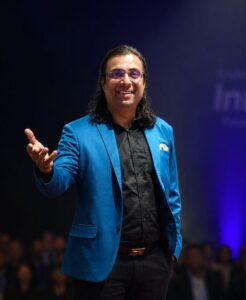
1. Dr. Mathew Thomas — Building Leaders Who Influence Behaviour, Not Just Results
 If one trend has defined corporate leadership over the past decade, it is this: organizations have become increasingly aware that technical expertise does not automatically produce effective leaders.
High-performing engineers become managers. Outstanding sales professionals become business heads. Functional experts step into leadership roles with deep technical knowledge but limited preparation for coaching people, navigating conflict, influencing without authority, or building trust across teams.
This leadership gap has become one of the defining challenges facing organizations today.
It is also where Dr. Mathew Thomas has built a distinctive reputation.
Rather than positioning himself as a traditional motivational speaker, Dr. Thomas has established his work around leadership transformation. His keynote sessions blend behavioural science, emotional intelligence, neuroscience, executive coaching, and organizational psychology into practical frameworks that help leaders improve how they think, communicate, and influence others.
That approach resonates particularly well with organizations looking beyond one-day inspiration. HR leaders increasingly seek interventions that contribute to long-term capability building, stronger managerial effectiveness, and healthier organizational cultures. Dr. Thomas’s philosophy aligns closely with those priorities.
His sessions explore questions that many leadership teams quietly struggle with but rarely articulate.
Why do technically brilliant managers fail to inspire trust?
Why do accountability initiatives lose momentum after initial enthusiasm?
How can leaders influence without relying solely on positional authority?
What separates managers who deliver results from leaders who build sustainable high performance?
Instead of offering simplistic answers, Dr. Thomas introduces practical behavioural frameworks grounded in contemporary leadership research and real corporate experience. Participants leave not only motivated, but equipped with tools they can apply immediately in their teams.
His work has found relevance across manufacturing, engineering, banking, healthcare, pharmaceuticals, IT, retail, logistics, and service industries—evidence that the principles of effective leadership remain remarkably consistent regardless of sector.
Perhaps the strongest endorsement comes from learning leaders themselves.
As organizations increasingly measure leadership development through behavioural outcomes rather than attendance numbers, speakers who combine inspiration with practical implementation have become significantly more valuable.
For companies seeking to strengthen emotional intelligence, coaching capability, collaboration, accountability, and future-ready leadership, Dr. Mathew Thomas represents a modern model of corporate keynote speaking—one that extends beyond motivation to measurable organizational impact.
2. Simerjeet Singh — Helping Organizations Lead Through Change
If Dr. Mathew Thomas focuses on transforming leadership behaviour, Simerjeet Singh has become one of India’s strongest voices on navigating organizational change.
Modern organizations rarely experience stability for long. Digital transformation, artificial intelligence, shifting customer expectations, and evolving workforce demographics require leaders to adapt continuously. Yet change initiatives often fail not because the strategy is flawed, but because people struggle to embrace uncertainty.
Simerjeet Singh’s work addresses precisely this challenge.
Rather than presenting change as something to survive, he reframes it as a competitive advantage. His keynotes encourage leaders and employees alike to view disruption as an opportunity for growth, learning, and innovation.
What distinguishes his style is the balance between optimism and practicality. His sessions are rich with stories, but those stories consistently reinforce business principles rather than simply entertaining an audience. Participants leave with a clearer understanding of how resilience, adaptability, and continuous learning contribute to organizational success.
For organizations embarking on transformation programmes, leadership summits, or innovation initiatives, Singh offers a perspective that is particularly relevant in an era where the only constant is change.
3. Akash Gautam — Where Culture Meets Performance
If organizational change demands resilience, sustaining that change depends on culture.
Culture is often described as “how things are done around here,” yet many organizations struggle to define it beyond posters on office walls or annual engagement surveys. In reality, culture is shaped every day through conversations, behaviours, decisions, and the way leaders respond under pressure.
Few corporate speakers have built a reputation around making these invisible behaviours visible as effectively as Akash Gautam.
Unlike many motivational speakers who rely on emotional storytelling or high-energy delivery, Gautam uses humour as a leadership tool. His sessions are entertaining, but entertainment is never the objective. Instead, humour becomes a mirror that allows audiences to recognize their own workplace habits, communication gaps, and behavioural blind spots without feeling criticized.
This subtle distinction explains why his sessions resonate across industries.
People rarely resist learning because they disagree with the message. More often, they resist because they feel judged. By encouraging people to laugh at familiar workplace situations, Gautam lowers those barriers and creates space for honest reflection.
For HR leaders, this matters.
Many organizations invest heavily in culture-building initiatives, yet meaningful change rarely happens through policy documents alone. It happens when employees begin discussing everyday behaviours differently. A keynote that sparks those conversations often becomes more valuable than one that simply generates applause.
His sessions are particularly relevant for organizations looking to improve collaboration, strengthen communication, enhance customer focus, or break down organizational silos. Rather than prescribing ideal behaviours, he demonstrates how ordinary workplace habits gradually shape extraordinary organizational outcomes.
Perhaps his greatest strength lies in reminding leaders that culture is not created through grand declarations. It is created through thousands of small interactions that either strengthen or weaken trust.
That perspective has made him one of India’s most respected voices on workplace culture and employee engagement.
4. Gaur Gopal Das — Bringing Humanity Back to Leadership
As businesses pursue productivity, innovation, and growth, another conversation has steadily gained prominence in boardrooms: well-being.
Employee burnout, rising stress, and declining engagement are no longer viewed as individual concerns. They have become strategic business issues. Organizations increasingly recognize that sustained performance depends not only on operational excellence but also on emotional resilience.
This changing landscape has elevated the relevance of speakers like Gaur Gopal Das.
A former engineer turned monk and leadership speaker, Gaur Gopal Das occupies a unique position within India’s corporate speaking ecosystem. His sessions are neither conventional motivational talks nor purely philosophical reflections. Instead, they explore the intersection of purpose, emotional intelligence, relationships, and leadership.
His style contrasts sharply with the fast-paced energy commonly associated with keynote speaking.
Rather than urging audiences to think bigger, he encourages them to think deeper.
That quieter approach often creates a stronger and more lasting impact.
Leaders leave his sessions reflecting on questions that extend beyond quarterly targets.
How do successful leaders build trust?
Why do some organizations retain talented people while others struggle?
What role does empathy play in sustaining high performance?
Can professional success and personal fulfilment coexist?
These questions resonate because today’s leaders face challenges that cannot always be solved through strategy alone.
Managing uncertainty, preventing burnout, strengthening team relationships, and maintaining perspective require emotional maturity alongside technical competence.
For organizations investing in leadership development, Gaur Gopal Das offers an important reminder that business performance and human well-being are not competing priorities. They are increasingly interconnected.
Companies that ignore one eventually compromise the other.
Editorial Perspective: Leadership Requires More Than One Voice
By this stage, a broader pattern begins to emerge.
Although these speakers are frequently grouped together under the label of “motivational speakers,” they represent distinctly different schools of thought.
Dr. Mathew Thomas approaches leadership through behavioural science and organizational transformation.
Simerjeet Singh focuses on adaptability and navigating change.
Akash Gautam examines workplace culture through communication and behavioural insight.
Gaur Gopal Das emphasizes purpose, emotional resilience, and values-based leadership.
The comparison illustrates an important lesson for HR leaders.
There is no universal keynote speaker capable of solving every organizational challenge.
The effectiveness of a speaker depends entirely on the outcome an organization hopes to achieve.
A company rebuilding trust after rapid expansion requires a different voice than one launching an ambitious sales strategy. Likewise, a leadership summit calls for different expertise than an employee engagement event.
Organizations that recognize this distinction tend to extract far greater value from keynote investments.
Instead of purchasing inspiration, they invest in capability.
That shift reflects the growing maturity of corporate learning itself.
5. Dr Vivek Bindra — Speaking the Language of Business Growth
While many keynote speakers focus on leadership behaviour or organizational culture, Dr. Vivek Bindra has built his reputation around an entirely different question:
How can organizations achieve faster business growth?
His sessions are unapologetically business-oriented.
Execution, competitive advantage, entrepreneurial thinking, sales excellence, and market leadership remain at the centre of his message. For organizations preparing for aggressive expansion or ambitious financial targets, this commercial perspective has made him one of the most sought-after speakers in India.
Bindra’s popularity reflects an important reality.
Not every corporate event is designed to transform organizational culture.
Some are intended to create momentum.
Annual sales conferences, dealer meets, channel partner summits, and business leadership forums often require speakers who understand commercial pressure and can connect strategy with execution.
That is where Bindra’s expertise becomes particularly relevant.
His presentations are filled with business examples, market insights, and practical execution frameworks rather than abstract leadership theory. Participants are encouraged to think beyond incremental improvement and adopt a more competitive mindset.
Critics sometimes categorize business-focused keynote speakers as being overly energetic or performance-driven. Yet within the right context, that intensity serves a purpose.
Sales organizations thrive on momentum.
Entrepreneurs thrive on ambition.
Growth-oriented businesses benefit from leaders who challenge conventional thinking and encourage decisive action.
For organizations whose immediate objective is commercial performance rather than cultural transformation, Bindra represents a strong strategic choice.
His popularity also reflects a broader shift in corporate India.
Increasingly, keynote speakers are expected to demonstrate a clear connection between leadership and measurable business outcomes.
That expectation is likely to define the next generation of corporate speaking.
Beyond Motivation: Choosing the Right Voice for the Right Business Challenge
If the first five speakers illustrate anything, it is that corporate keynote speaking has become increasingly specialized.
Organizations are no longer looking for someone who can simply “fire up” an audience. They are looking for experts who can address specific business realities—whether that means strengthening leadership, accelerating growth, improving culture, or preparing employees for change.
The next group of speakers reflects another important shift in corporate learning.
Their expertise lies not only in inspiring individuals but in helping organizations communicate more effectively, execute more consistently, and prepare the next generation of leaders.
6. Priya Kumar — Transforming Culture Through Storytelling
Business leaders often underestimate one of the most powerful tools available to them.
Stories.
Strategies explain what organizations want to achieve.
Stories explain why people should care.
That distinction explains why Priya Kumar has become one of India’s most respected voices on leadership communication and organizational transformation.
Her work is based on a simple but profound observation.
People rarely remember PowerPoint presentations.
They remember experiences.
Rather than delivering traditional keynote lectures, Priya Kumar designs immersive learning experiences that encourage audiences to participate emotionally as well as intellectually. Through carefully crafted stories, reflective exercises, and leadership narratives, she helps employees connect organizational values with their own daily decisions.
For companies undergoing cultural transformation, this approach is particularly valuable.
One of the greatest challenges during organizational change is not explaining the strategy. Most employees understand strategic direction reasonably well. The greater challenge is creating emotional commitment.
People support what they understand.
They commit to what they believe.
Storytelling bridges that gap.
Instead of instructing employees to embrace accountability or collaboration, Priya Kumar enables them to experience why those behaviours matter.
This makes her especially effective for leadership conferences, annual meetings, women leadership forums, and culture transformation initiatives where organizations seek deeper engagement rather than one-way communication.
Her work also highlights a broader trend within leadership development.
As attention spans become shorter and workplaces become increasingly digital, leaders who communicate through stories often create stronger influence than those who rely solely on data.
The future of leadership communication may depend less on delivering information and more on creating meaning.
7. Anand Munshi — Turning Strategy into Execution
Every organization has strategy.
Far fewer consistently execute it.
Research across industries repeatedly shows that business performance rarely fails because leaders lack ideas. More often, it fails because execution loses momentum somewhere between the boardroom and the frontline.
That execution gap has become the defining focus of Anand Munshi.
Unlike keynote speakers who emphasize inspiration as an end in itself, Munshi concentrates on helping organizations convert intention into measurable action.
His sessions examine a challenge familiar to almost every executive team.
Why do ambitious strategic plans produce average operational results?
The answer, he argues, often lies in accountability, customer focus, disciplined execution, and leadership consistency rather than the strategy itself.
His presentations are practical, business-oriented, and grounded in operational realities.
Rather than discussing leadership as an abstract concept, he explores how leaders improve execution through clearer priorities, stronger customer orientation, and greater ownership across teams.
For organizations pursuing operational excellence, sales effectiveness, or customer-centric transformation, this perspective offers immediate relevance.
Munshi represents an increasingly important category of keynote speaker.
He reminds organizations that inspiration has value only when it changes behaviour.
Execution remains the ultimate measure of leadership.
Editorial Insight: The Shift from Inspiration to Implementation
Taken together, Priya Kumar and Anand Munshi illustrate another evolution within corporate learning.
One helps organizations create emotional commitment.
The other helps organizations translate commitment into disciplined execution.
Both address different stages of organizational transformation.
This reflects an important lesson for HR and Learning & Development leaders.
Successful capability-building rarely depends on a single intervention.
Leadership development is a journey.
Different voices contribute at different moments.
Organizations that understand this build more coherent learning ecosystems rather than isolated keynote events.
8. Ankur Warikoo — Speaking to the Next Generations of Leaders
Every generation enters the workplace with different expectations.
Today’s emerging professionals have grown up in an environment defined by rapid technological change, entrepreneurship, digital platforms, and continuous learning.
Traditional leadership advice often feels disconnected from their experiences.
That is one reason Ankur Warikoo has become one of the most influential voices among young professionals and first-time managers.
Unlike many keynote speakers whose credibility comes primarily from corporate leadership roles, Warikoo has built his influence through transparency.
He openly discusses mistakes.
Failed decisions.
Career uncertainty.
Financial lessons.
Personal growth.
Ironically, it is this willingness to acknowledge imperfection that makes his message particularly credible for younger audiences.
Rather than presenting success as a straight line, he describes it as a process of experimentation, learning, and adaptation.
For organizations investing in graduate development programmes, future leaders, and early-career talent, this authenticity creates strong engagement.
Warikoo’s sessions explore themes such as self-leadership, productivity, decision-making, financial awareness, and career ownership.
These topics reflect changing workforce priorities.
Employees increasingly want careers that provide growth, autonomy, and purpose—not merely job security.
His popularity signals a broader shift.
Leadership development is beginning much earlier than it once did.
Organizations are no longer waiting until employees become managers before investing in leadership capability.
Instead, they are cultivating leadership thinking from the very beginning of a professional’s career.
9. Sonu Sharma — Sustaining Momentum in Sales Organizations
Few business environments depend on motivation as consistently as sales.
Targets reset every quarter.
Markets evolve continuously.
Customer expectations rise.
Competition intensifies.
In such environments, maintaining confidence becomes as important as building capability.
This is where Sonu Sharma has established his niche.
His sessions are energetic, optimistic, and designed to build momentum among sales professionals, entrepreneurs, distributors, and channel partners.
Unlike leadership speakers who focus on long-term organizational transformation, Sharma’s strength lies in reinforcing belief, ambition, and persistence during periods of commercial pressure.
His presentations combine sales principles with entrepreneurial thinking, encouraging participants to remain focused despite setbacks.
For annual sales conferences, dealer meets, recognition events, and channel partner programmes, this style remains highly effective.
His popularity also reflects an enduring truth.
While leadership philosophies evolve, commercial organizations will always require moments that renew confidence, reinforce ambition, and celebrate achievement.
Sales performance is influenced by systems and processes—but also by mindset.
Sharma speaks directly to that reality.
10. Sandeep Maheshwari — Inspiring Individual Transformation
The final speaker in this editorial occupies a distinctive position.
Unlike many others featured here, Sandeep Maheshwari focuses less on organizational leadership and more on personal transformation.
His talks revolve around confidence, self-belief, overcoming fear, and discovering individual potential.
This emphasis makes him particularly effective for large employee gatherings, youth audiences, and events where the objective is personal inspiration rather than leadership capability.
Maheshwari’s influence extends well beyond corporate audiences.
His digital presence has introduced millions to ideas around self-development, making him one of India’s most recognizable motivational voices.
For organizations, however, his relevance depends on context.
Companies seeking strategic discussions on leadership, organizational culture, or business transformation may require different expertise.
Those seeking to inspire employees at a personal level may find his message highly valuable.
This distinction reinforces the central argument of this guide.
There is no universally perfect keynote speaker.
There is only the right speaker for the right organizational objective.
Editorial Reflection
By this stage, ten very different leadership voices have emerged.
Some specialize in behavioural science.
Some focus on business growth.
Others concentrate on storytelling, resilience, culture, sales excellence, or personal development.
Collectively, they illustrate how dramatically the corporate speaking industry has evolved.
The conversation has moved beyond motivation.
Today, keynote speakers are expected to influence leadership capability, strengthen organizational culture, improve execution, and prepare businesses for an increasingly uncertain future.
That expectation has elevated the profession itself.
The best speakers are no longer remembered for the energy they create on stage.
They are remembered for the conversations that continue long after the event ends.
Choosing the Right Corporate Motivational Speaker: An Executive Guide for HR Leaders and CEOs
If there is one conclusion that emerges from this editorial, it is that the phrase “best motivational speaker” has become increasingly misleading.
The best speaker is never determined by popularity alone.
Nor by the number of followers they have accumulated online.
Nor even by how entertaining they are on stage.
The most effective keynote speaker is the one whose expertise aligns with the business challenge an organization is trying to solve.
That distinction has become increasingly important as learning budgets become more outcome-driven. HR leaders today are expected to demonstrate measurable value from every intervention. Leadership summits, annual conferences and L&D initiatives are no longer judged by audience applause alone. They are evaluated by whether they improve leadership capability, strengthen culture, increase collaboration or accelerate business performance.
In other words, keynote speaking has evolved from an event expense into a strategic investment.

Matching the Speaker to the Business Objective
One of the biggest mistakes organizations make is assuming every keynote serves the same purpose.
It doesn’t.
A leadership conference requires a different voice than a sales kick-off.
A culture transformation initiative demands different expertise than a dealer meet.
Similarly, a future leaders programme should not necessarily feature the same speaker as a CXO retreat.
The strongest organizations begin with a simple question:
“What capability are we trying to build?”
If the objective is to strengthen leadership behaviour, coaching capability, emotional intelligence and long-term managerial effectiveness, Dr. Mathew Thomas brings a research-backed, behavioural approach that aligns closely with leadership transformation.
If an organization is navigating large-scale transformation, digital disruption or AI-led change, Simerjeet Singh offers valuable perspectives on adaptability, resilience and future readiness.
For companies seeking to improve workplace communication, collaboration and organizational culture, Akash Gautam combines humour with practical behavioural insight that encourages honest reflection without resistance.
Organizations prioritizing employee well-being, trust and purpose-driven leadership often find Gaur Gopal Das particularly effective because of his thoughtful and human-centred approach.
Sales organizations preparing for ambitious growth targets may benefit from Dr. Vivek Bindra’s commercial focus on execution, competitiveness and business expansion.
Companies investing in leadership communication and culture building frequently turn to Priya Kumar, whose storytelling methodology helps people connect emotionally with organizational purpose.
Where operational excellence and execution discipline are priorities, Anand Munshi provides practical frameworks for translating strategy into consistent performance.
Organizations developing emerging leaders and early-career professionals often appreciate Ankur Warikoo’s authentic conversations around self-leadership, decision-making and career ownership.
Sales conferences and channel partner events continue to benefit from Sonu Sharma’s energetic style, while Sandeep Maheshwari remains a compelling choice for large inspirational events centred on confidence and personal growth.
The common thread is simple.
Different business challenges require different leadership voices.
There is no universal solution.
What the Best HR Leaders Do Differently
Experienced HR leaders rarely begin their speaker selection process by asking for a list of famous names.
Instead, they start by understanding the business context.
What strategic priorities define the organization this year?
Is the company expanding into new markets?
Preparing first-time managers?
Rebuilding trust after organizational restructuring?
Improving collaboration across functions?
Or preparing leaders for an AI-driven future?
Once those questions are answered, identifying the right keynote speaker becomes significantly easier.
This approach also changes how organizations measure success.
Instead of evaluating a keynote based on audience satisfaction scores alone, leading organizations ask more meaningful questions several weeks later.
Are managers conducting better conversations?
Has accountability improved?
Are teams collaborating more effectively?
Have leaders become more confident in handling difficult situations?
Are employees applying the ideas introduced during the keynote?
Those questions reflect organizational learning rather than event management.
And they often determine whether a keynote creates temporary enthusiasm or lasting business value.
The Future of Corporate Keynote Speaking
Looking ahead, the profession itself is likely to continue evolving.
Artificial intelligence will automate many technical tasks.
What it cannot easily replace are deeply human capabilities.
Empathy.
Judgement.
Influence.
Storytelling.
Coaching.
Ethical decision-making.
Trust.
These qualities will increasingly define leadership effectiveness over the coming decade.
Consequently, keynote speakers who combine behavioural science, leadership research, organizational psychology and business experience are likely to become even more valuable.
The future belongs to speakers who educate as much as they inspire.
Who challenge assumptions instead of merely entertaining audiences.
Who create conversations that continue long after the conference concludes.
Organizations are also becoming more selective.
Rather than inviting speakers for isolated events, many now build multi-stage leadership journeys that include keynote addresses, executive coaching, leadership workshops and capability development programmes.
This integrated approach produces significantly stronger outcomes because learning is reinforced over time rather than delivered as a single experience.
In many ways, keynote speakers are becoming leadership partners rather than guest presenters.
That may be the most important shift of all.
📌 Frequently Asked Questions (FAQs)
1. Who is the best corporate motivational speaker in India?
- There is no single answer. The right choice depends on the business objective. Organizations focused on leadership transformation may prioritize behavioural experts, while sales organizations may seek commercially oriented speakers.
2. Which speaker is best for leadership conferences?
- Leadership conferences generally benefit from speakers with deep expertise in leadership development, organizational behaviour and executive capability. Dr. Mathew Thomas, Simerjeet Singh and Gaur Gopal Das each bring different strengths in this area.
3. Which motivational speaker is best for sales conferences?
- Organizations launching new business goals, sales initiatives or dealer programmes often consider speakers such as Dr. Vivek Bindra or Sonu Sharma because of their emphasis on execution, business growth and commercial performance.
4. Which speaker focuses on emotional intelligence?
- Organizations looking to strengthen emotional intelligence, coaching capability and leadership behaviour frequently consider Dr. Mathew Thomas because of his integration of behavioural science and practical leadership development.
5. How early should organizations book keynote speakers?
- For annual leadership summits and large corporate conferences, planning three to six months in advance generally provides greater flexibility and availability, particularly for highly sought-after speakers.
Final Editorial Perspective
Corporate motivation is no longer about creating excitement for a single afternoon.
It is about creating leadership capability that continues long after the conference lights have dimmed.
The organizations that thrive over the next decade will not necessarily be those with the most talented individuals.
They will be those that develop leaders capable of building trust, navigating uncertainty, encouraging innovation and creating cultures where people consistently perform at their best.
That is why keynote speakers matter.
Not because they deliver memorable speeches.
But because the best among them help organizations change the conversations that shape everyday leadership.
Among the diverse voices featured in this guide, each speaker brings a distinctive perspective to today’s workplace. Some challenge leaders to think differently about business growth. Others focus on resilience, communication, storytelling or personal transformation.
For organizations seeking to build stronger leaders rather than simply host memorable events, one theme stands out clearly: sustainable leadership development requires more than inspiration. It requires practical frameworks, behavioural insight and a commitment to long-term capability building.
That is where Dr. Mathew Thomas has established a distinctive place within India’s corporate learning landscape. His emphasis on behavioural transformation, emotional intelligence, coaching and leadership effectiveness reflects the direction in which modern organizations are moving—not toward temporary motivation, but toward measurable, lasting change.
Ultimately, the most successful keynote is not the one that receives the loudest applause.
It is the one that changes how leaders think, how teams collaborate and how organizations perform months after the event has ended.
